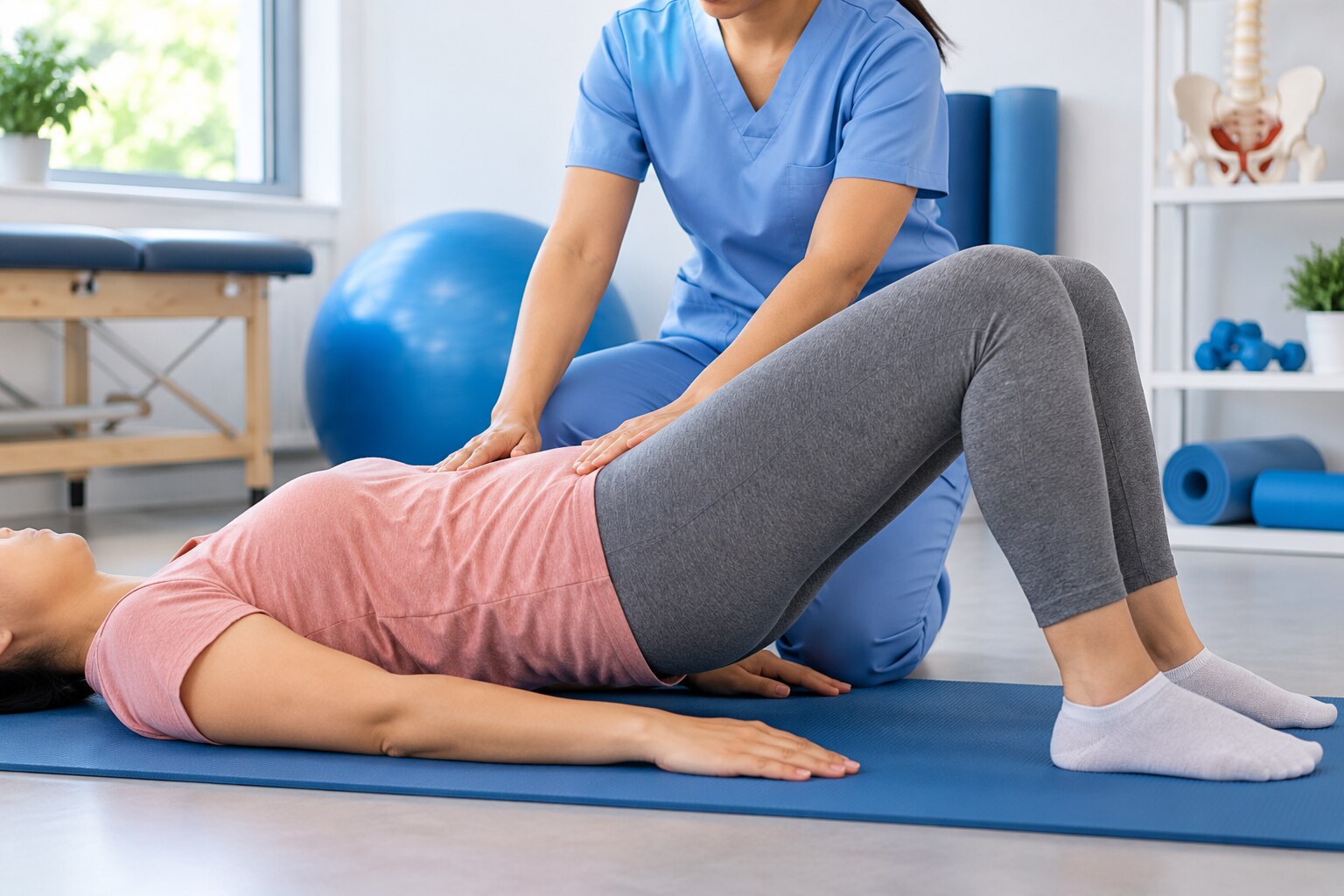
Leakage, urgency, frequent urination, or difficulty emptying your bladder can result from different problems, and repeated Kegel exercises are not the right answer for everyone. By the end, you will understand how the pelvic floor works, what an assessment involves, and how treatment can progress from breathing and muscle awareness to coordinated control during everyday movement.
Key takeaways
- Match your symptoms to urgency, leakage, or mixed bladder patterns.
- Coordinate pelvic floor contractions with breathing instead of holding your breath.
- Train both contraction and relaxation to improve bladder control and core support.
- Practise control during coughing, lifting, walking, and other real-life activities.
How the pelvic floor controls urine and supports your trunk
The pelvic floor is a hammock-shaped group of muscles and connective tissue spanning the bottom of your pelvis. It supports the bladder and bowel, helps control the urethra, and works with your breathing system to manage pressure inside your abdomen.
- The pelvic floor muscles surround the openings for the urethra, vagina and anus. They can tighten, lengthen and relax.
- Connective tissue helps suspend and stabilise the pelvic organs, including the bladder, vagina and rectum.
- The bladder stores urine until you decide to empty it. Its position and support affect how pressure reaches the outlet.
- The urethra carries urine out of the body. Pelvic floor muscles help close it before and during a cough or sudden load.
- Understanding vagina and rectum anatomy helps explain why pelvic floor problems can affect continence, bowel function and sexual comfort.
These muscles also work with the diaphragm, abdominal wall and spinal muscles. When you lift, cough or change direction, they coordinate with those muscles to manage pressure and transfer force through your trunk.
Effective support requires both contraction and relaxation. Habitual clenching or bearing down can disrupt timing and worsen urgency, pelvic pain or difficulty emptying the bladder, so stronger is not always better.
Which bladder symptom pattern are you dealing with?
The trigger and timing of leakage usually identify the pattern. Keep a bladder diary for at least three days, recording drinks, caffeine, urination, urgency, leakage, activity and night-time waking; memory often misses these links.
| Pattern | What you notice | What it suggests |
|---|---|---|
| Stress urinary incontinence | Leakage when you cough, sneeze, laugh, lift, run or exercise, without a strong urge first | Pressure briefly exceeds urethral closure |
| Urgency urinary incontinence | A sudden, difficult-to-delay urge followed by leakage before reaching the toilet | Bladder urgency drives the leak |
| Mixed incontinence | Both activity-related leakage and urge-related leakage | Stress and urgency mechanisms coexist |
| Urinary frequency | You pass urine unusually often during the day, with or without leakage | Frequent trips, rather than the trigger, are the main problem |
| Nocturia | You wake from sleep to urinate; record each waking and volume if practical | Night-time bladder symptoms, which can overlap with evening fluids, sleep problems or other conditions |
| Incomplete emptying | Dribbling after urination, a weak or interrupted stream, straining, hesitancy, or a persistent feeling of urine remaining | Leakage may follow retained urine rather than a weak closing muscle |
The dominant pattern changes the next step. Pelvic floor muscle training is central for stress urinary incontinence and mixed incontinence, while urgency urinary incontinence often needs bladder training, urge-suppression practice, fluid and caffeine review, and constipation management.
Do not repeatedly clench or strengthen if you have pelvic pain, difficulty starting urine or persistent incomplete emptying; seek clinical assessment instead.
What happens during a pelvic floor physiotherapy assessment?
A three-day bladder diary gives the assessment evidence that memory often misses. Record drinks, caffeine, toilet visits, urgency, leakage, night-time urination, and what you were doing when symptoms appeared. The pattern helps distinguish leakage with pressure from urgency-driven leakage or frequent voiding.
Your physiotherapist then takes a focused history and checks:
- Bowel habits and constipation, which can increase pressure and affect emptying
- Breathing pattern and posture during rest, coughing, lifting, and movement
- Abdominal pressure and whether you hold your breath or bear down
- Pelvic floor contraction, relaxation, endurance, and timing
- Your ability to coordinate the pelvic floor with the diaphragm and abdominal muscles
A pelvic floor assessment may include an external examination and, with your consent, an internal examination. The physiotherapist checks whether you can lift and close the muscles, release them fully, and contract at the right moment.
A strong squeeze that arrives too late will not protect you during a cough; constant clenching can worsen urgency, pelvic pain, difficulty starting urine, or incomplete emptying.
The findings point toward the likely problem: weakness, poor timing, an overactive pelvic floor, or a coordination issue elsewhere in the movement system. Pain, blood in the urine, repeated infections, or persistent difficulty emptying needs medical review rather than repeated strengthening.
N V Physiotherapy clinic - 9076000356 can use this distinction to avoid prescribing pelvic floor exercises when relaxation or bladder training is the safer starting point.
Related service
Women's Health Care Therapy ₹800 At N V Physiotherapy Clinic in Thane, Dr. Nikita Vaidya Kulkarni (PT) provides specialized women’s health care therapy tailored to every stage of a... View service → |
How do you contract, relax, and train the pelvic floor correctly?
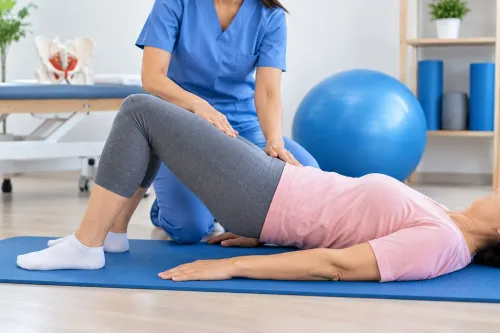
The aim is a correct pelvic floor contraction: a gentle lift and squeeze around the urethra and anus, not a downward push. Keep your buttocks, thighs and upper abdomen quiet while breathing normally. Breath holding and bearing down increase downward pressure and train a less useful response for coughing or lifting.
Practise lying or sitting, where you can notice the movement without straining. Imagine stopping urine and gas together, but do not repeatedly practise during urination because this can interfere with bladder emptying. Hold the lift briefly, then release completely.
Pelvic floor relaxation matters as much as the squeeze; the muscles should soften between repetitions and lengthen with an easy inhalation. Pain or difficulty starting urine calls for assessment before you add more Kegel exercises, because repeated strengthening can aggravate an overactive pelvic floor.
Progress only when the movement stays controlled:
- Start with slow contractions and a full release, then add quick contractions for sudden pressure such as a cough.
- Increase the hold or repetitions gradually, stopping before your breathing changes or the muscles begin to clench.
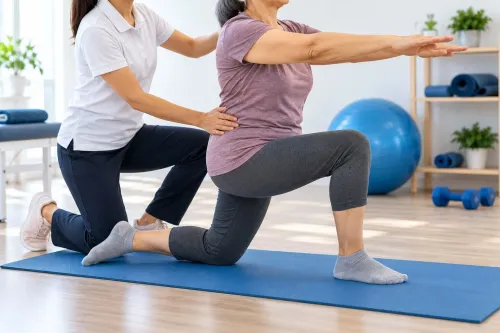
- Add the exercise during standing, walking, lifting or rising from a chair once the basic contraction feels easy.
Stop if you push down, hold your breath or lose the release. A physiotherapist can adjust the workload and decide whether you need strengthening, coordination practice or more pelvic floor relaxation. Training should improve control without leaving the muscles tense, sore or exhausted.
How does treatment translate into bladder control during real activities?
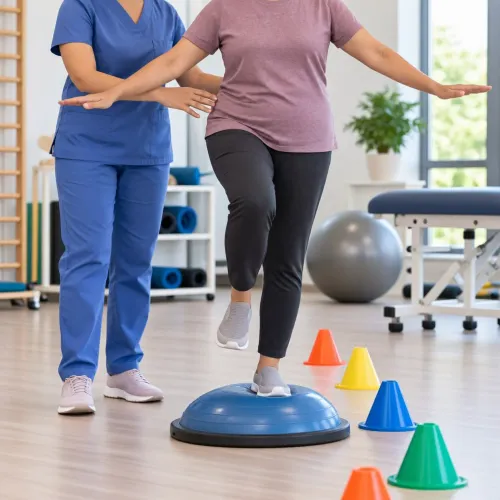
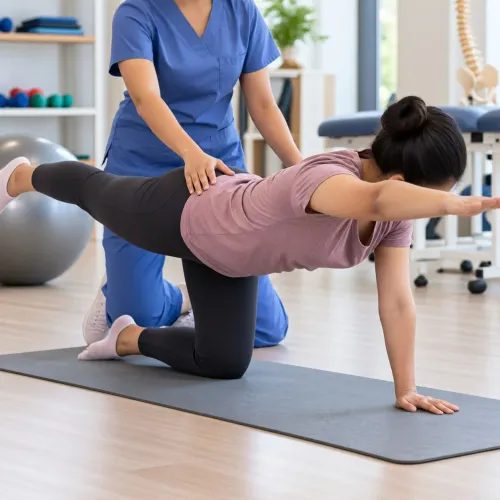
A cough is a pressure test, not a request for maximum squeezing. Physiotherapy trains the pelvic floor to contract just before and during a pressure spike, while the diaphragm, abdominal wall and spinal muscles share the load. This pelvic floor and core coordination creates functional bracing without breath-holding or bearing down.
Treatment then rehearses that timing in the situations that trigger your symptoms:
- Coughing or sneezing: gently contract before the movement, breathe out, and release afterward.
- Lifting: coordinate the pelvic floor with an exhale and steady abdominal support instead of gripping hard or holding your breath.
- Running, jumping or exercise: build strength, endurance and rapid responses through graded impact, rather than squeezing continuously.
- Getting up, turning or carrying: practise pelvic floor and core coordination as pressure shifts through your trunk.
- Sudden urgency: use urge suppression by stopping, breathing slowly, relaxing your abdomen, and performing controlled pelvic floor contractions before walking to the toilet.
For urgency incontinence, bladder training extends the time between toilet visits and reduces “just in case” trips. A bladder diary can guide timed increases, while reviewing caffeine, fluid intake and constipation addresses triggers that keep urgency active. Practise the plan for at least six weeks before judging its effect.
Strength work alone will not fix poor timing, and repeated hard contractions can worsen tension or urgency.
Frequently asked questions
How does the pelvic floor support bladder control and core function?
Pelvic floor muscles support the bladder, help close the urethra, and work with breathing to manage abdominal pressure and trunk stability.
Which bladder symptom patterns can pelvic floor physiotherapy address?
Assessment distinguishes patterns such as leakage with coughing or lifting, sudden urgency, frequent urination, and mixed symptoms.
What happens during a pelvic floor physiotherapy assessment?
The physiotherapist reviews your bladder symptoms, triggers, bowel and medical history, breathing, movement, and pelvic floor contraction and relaxation.
How do you contract and relax the pelvic floor correctly?
Gently lift the muscles used to stop urine or gas without tightening your abdomen or holding your breath, then release fully between contractions.
How can pelvic floor training improve bladder control during daily activities?
You practise timing pelvic floor activation before pressure-producing actions such as coughing, lifting, standing, walking, or exercise.