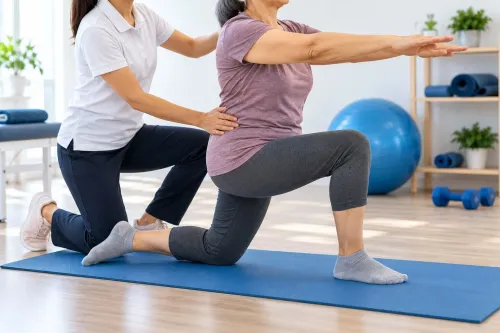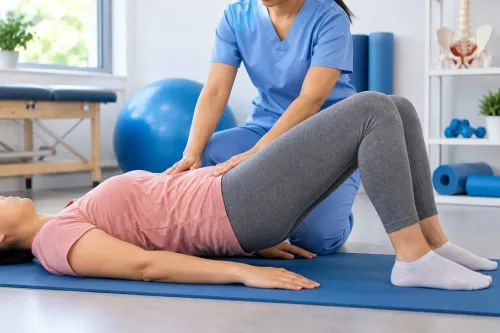
Posture stability depends on coordinated control of your trunk, pelvis, hips, breathing, and legs—not on visible abdominal definition or holding your stomach tight all day. By the end, you will know how to train that control, progress safely, and apply it to lifting, carrying, walking, sitting, and getting up from a chair.
Key takeaways
- Use breathing and pelvic alignment before adding core exercise intensity.
- Train trunk, hips, glutes, and pelvic floor as one movement system.
- Start with controlled repetitions and progress only when form stays steady.
- Modify exercises for pain, pressure, breath-holding, or pelvic-floor symptoms.
What Your Core Does—and What Core Strength Really Means
Useful core strength is coordinated control of your trunk, pelvis, hips, and breathing while you move, not maximum abdominal tension. The core muscles include the diaphragm, deep abdominal muscles, multifidus, pelvic-floor muscles, hip muscles, and gluteal muscles. Together, they manage pressure, balance, force transfer, and spinal movement.
The term multifidus604?keyword? is not a recognised muscle name; multifidus is the small spinal muscle relevant to segmental control. It works with the diaphragm and pelvic floor rather than operating alone.
| Approach | What it measures | What it misses |
|---|---|---|
| Visible abs | Muscle size and body-fat distribution | Breathing, balance, hip control, and movement quality |
| Sit-ups | Repeated trunk flexion | Load tolerance and stability during lifting or walking |
| Constant bracing | Sustained abdominal tension | Relaxation, breathing, and adaptable movement |
| Functional strength | Control while breathing and changing position | A single score or exercise cannot capture every task |
A plank time or sit-up count therefore cannot prove useful stability. Functional strength means creating enough support for the task, then releasing or adjusting it as you walk, climb stairs, lift, sit, or rise. More tension is not automatically better.
Breathing and Alignment for Safer Core Training
Exhale gently through pursed lips during the hardest part of each movement, then inhale without losing control. This core breathing keeps the diaphragm, abdominal wall and pelvic floor working together instead of creating pressure by holding your breath.
Stop or reduce the effort if you feel dizzy, develop a headache, or cannot speak a short sentence.
Find a neutral spine by keeping the natural curves of your back, not flattening your waist into the floor. Set a neutral pelvis by keeping your hip bones and pubic bone level rather than tipping the pelvis forward and arching the lower back.
Your ribs should remain stacked over your pelvis; if they lift or flare, reduce the range of the exercise.
Use abdominal bracing versus hollowing according to the task, not as a contest. Bracing gently firms the whole trunk as if preparing for a light cough, while hollowing draws the lower abdominal wall inward. Both are useful only when you can keep breathing and move without gripping your neck.
Relax your shoulders, let your jaw stay loose, and keep the head aligned with the spine rather than reaching the chin forward. A controlled, comfortable position beats a rigid one.
Six Beginner Exercises for Posture Stability
Choose the version you can repeat without rib flare, lower-back arching, breath-holding, or neck tension. These six exercises train trunk, hip, and leg control rather than testing how long you can endure one posture.
| Exercise | Main control | Essential cues |
|---|---|---|
| Dead bug | Trunk control while limbs move | Lie on your back with hips and knees at 90 degrees. Exhale as one heel lowers; keep your ribs relaxed and stop before your back arches. |
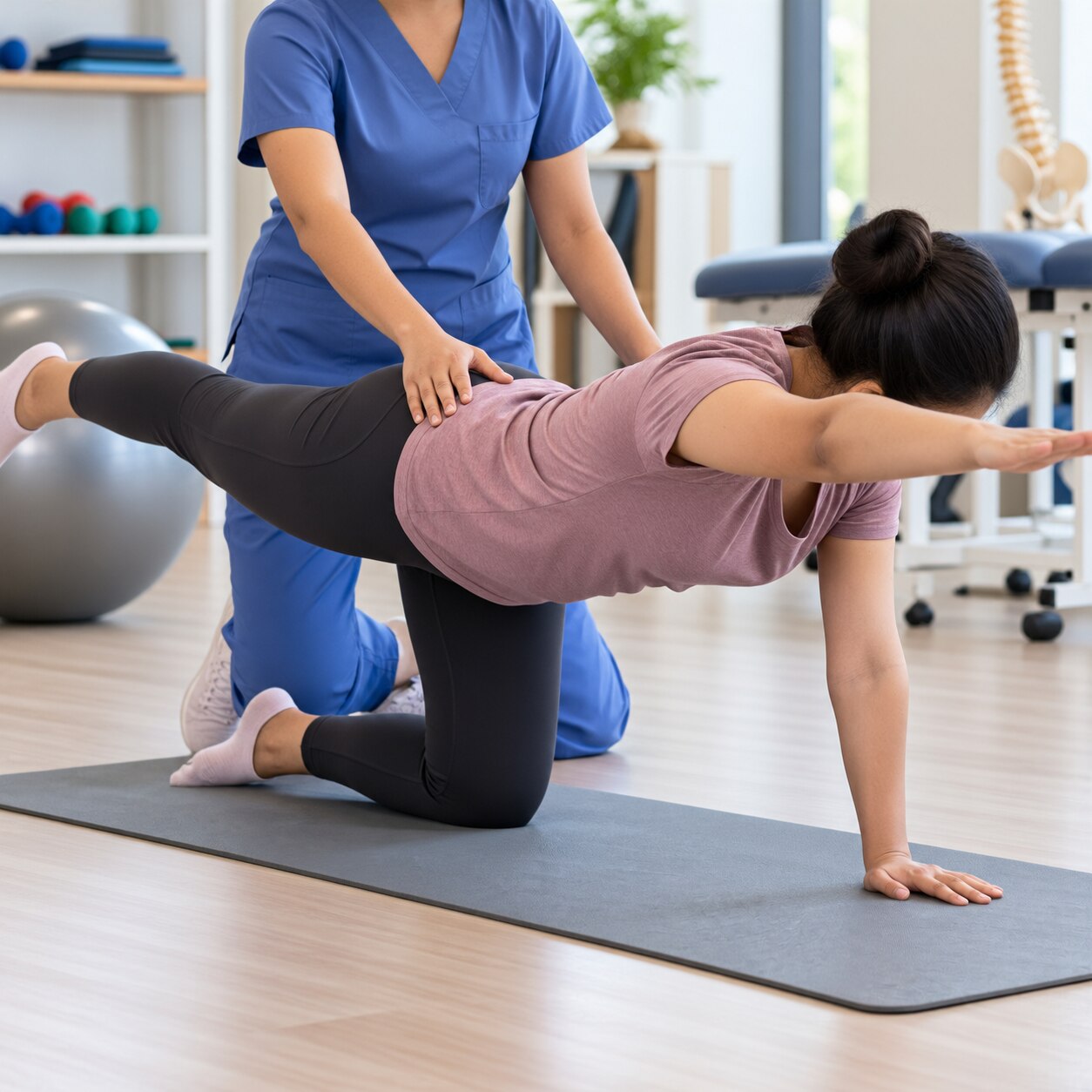
| Bird dog | Trunk and hip stability | From hands and knees, reach the opposite arm and leg. Keep your pelvis level, push the floor away, and move slowly rather than lifting high. |
| Side plank modification | Side-body and hip control | Support your weight on a bent knee and forearm. Lift your hips into a straight line from shoulder to knee; keep your neck long. |
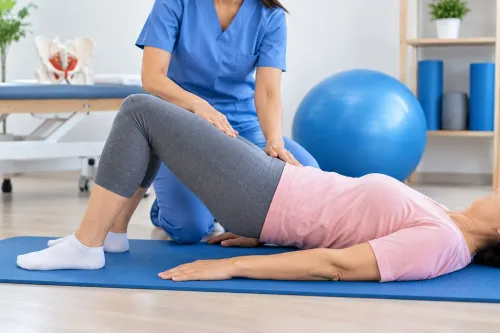
| Glute bridge | Hip and leg strength | Place feet under your knees and lift your pelvis by squeezing your glutes. Finish with your hips level, not with your lower back. |
| Pallof press | Rotational control | Stand sideways to a resistance band, hold it at your chest, and press forward. Resist turning, keep knees soft, and breathe normally. |
| Sit-to-stand | Leg, hip, and trunk coordination | Place feet under your knees, lean your chest slightly forward, and stand through both feet. Lower quietly without knees collapsing inward. |
Use a wall, lower range, or lighter resistance when control breaks. Pain, pelvic pressure, or urine leakage calls for individual assessment rather than pushing through.
How to Set Repetitions and Progress Without Guessing
Start with two sets of 6 to 10 controlled repetitions for moving exercises, or 3 to 5 holds of 10 to 20 seconds for static exercises. Rest 45 to 75 seconds between sets, and schedule your core strengthening routine on two or three non-consecutive days each week.
1. Choose a level you can perform without breath-holding, rib flaring, neck tension, pelvic pressure, or lower-back arching. Stop each set while you still have two clean repetitions or five seconds of steady control left.
2. Repeat the same sets and repetitions for two weeks. Add repetitions before adding difficulty: move from 6 to 10 repetitions, or increase hold time by 5 seconds, while keeping your breathing and alignment unchanged.
3. Progress one variable at a time. Add a third set, extend a hold to 30 seconds, increase resistance slightly, or use a less-supported version such as a longer-lever side plank. Keep rest periods at 60 to 90 seconds when the new challenge reduces control.
4. Reduce the workload for 48 hours if soreness changes your movement. Return to the previous level if technique breaks down, and seek assessment for radiating pain, progressive weakness, numbness, or new bladder or bowel changes. Consistency matters more than a longer plank.
Turning Core Control Into Everyday Movement
Core stability becomes useful when you coordinate your breath, trunk, pelvis, hips, and legs instead of holding your stomach rigid. Use these cues during common tasks:
- Lifting a child: bring the child close, bend through your hips and knees, exhale as you stand, and keep your ribs stacked over your pelvis.
- Carrying bags: divide weight between hands, keep the load near your body, and switch sides before one hip hikes or your trunk leans.
- Climbing stairs: place your whole foot on each step, press through the leading leg, and keep your pelvis level rather than pushing off heavily from behind.
- Walking: let your arms swing, keep your gaze forward, and allow your trunk to move naturally instead of stiffening it.
- Sitting: support your feet, change position regularly, and avoid chasing one rigid “perfect” posture.
- Rising from a chair: move your nose over your toes, exhale, and push through both feet during the sit-to-stand.
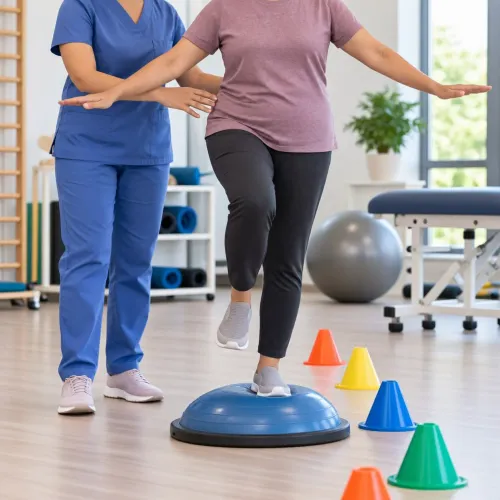
Try a posture stability self-check: complete five slow sit-to-stand repetitions, hold a single-leg balance for up to 20 seconds on each side, and perform a light Pallof press without twisting. Notice unequal control, breath-holding, pain, or loss of balance. These movement results reveal more than a plank time alone.
When to Modify Core Exercises or Seek Individual Guidance
Change the exercise when symptoms change, not when you feel you must prove toughness. During uncomplicated pregnancy, pregnancy exercise can continue, but reduce load, range, supine work, or intensity if discomfort, bleeding, fluid loss, contractions, chest pain, or breathlessness occurs; seek obstetric advice for complications. After childbirth, postpartum core rehabilitation should progress gradually.
Persistent pain, wound problems, marked doming, leakage, or pelvic pressure deserves assessment rather than harder abdominal work.
Stop the session and seek individual guidance for:
- Urinary or fecal leakage, pelvic heaviness, bulging, or pressure; abdominal exercises do not replace pelvic-floor assessment and training.
- Dizziness, breath-holding, or unusual shortness of breath; exhale during effort and avoid prolonged straining.
- Low-back pain red flags: progressive weakness, saddle numbness, new bladder or bowel dysfunction, fever, or unexplained weight loss. Familiar muscle soreness can be monitored; worsening pain needs review.
N V Physiotherapy clinic - 9076000356 can help women choose graded modifications when pelvic-floor symptoms, postpartum recovery, or neurological symptoms make generic progression unsafe.
Related service
Women's Health Care Therapy ₹800 At N V Physiotherapy Clinic in Thane, Dr. Nikita Vaidya Kulkarni (PT) provides specialized women’s health care therapy tailored to every stage of a... View service → |
Frequently asked questions
What does core strength mean for posture and everyday movement?
Core strength means coordinated control of the trunk, pelvis, hips, breathing, and spinal movement while you move—not maximum abdominal tension.
How should you breathe during beginner core exercises?
Keep breathing smoothly, avoid breath-holding, and coordinate gentle abdominal engagement with a comfortable, aligned posture.
How many repetitions should beginners do for core exercises?
Use controlled repetitions that preserve alignment and breathing, then progress gradually when the exercise feels stable rather than chasing a fixed number.
When should you modify a core exercise or seek individual guidance?
Modify the exercise for pain, breath-holding, pelvic pressure, leaking, abdominal doming, or loss of control, and seek individual guidance when symptoms persist.